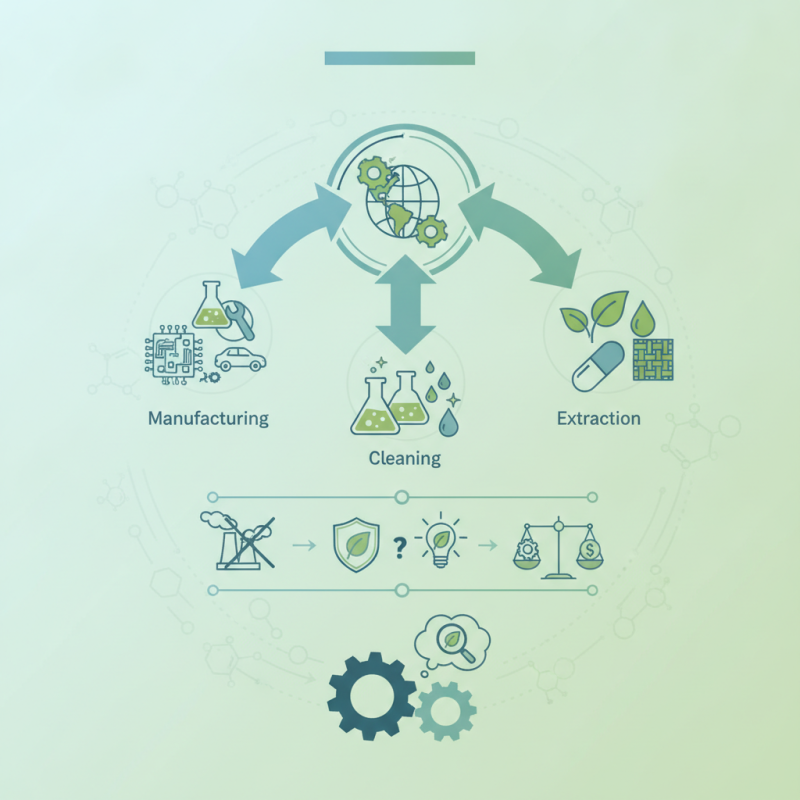
Chemical solvents play a vital role in numerous industries worldwide. They are fundamental in processes such as manufacturing, cleaning, and extraction. Dr. Emily Carter, a leading expert in industrial chemistry, stated, "Chemical solvents are the unsung heroes of modern production." Her words highlight the importance of these substances.
In industries like pharmaceuticals and textiles, chemical solvents enable the formulation of products that enhance our daily lives. They dissolve, extract, and purify a wide range of materials. Their versatility makes them indispensable, yet reliance on them can raise questions about sustainability and safety.
Maintaining a balance between efficiency and environmental impact is essential. Many companies are now exploring greener alternatives to traditional chemical solvents. This shift reflects a growing awareness of environmental responsibilities, though the transition can be challenging. The discussion surrounding chemical solvents is ongoing, inviting both innovation and reflection.
The Role of Chemical Solvents in Manufacturing Processes
Chemical solvents play a critical role in various manufacturing processes across global industries. They help dissolve, extract, and purify substances. This functionality is vital in chemical reactions, making them efficient and effective. For instance, solvents are used in paint production to create a smooth texture. They help achieve the desired color and finish.
In pharmaceuticals, the purity of drugs depends heavily on solvents. They aid in the synthesis and formulation of medications. Using the right solvent ensures that active ingredients are released effectively. However, selecting solvents can be challenging. Some solvents may pose environmental risks or health hazards. Manufacturers must weigh the benefits against potential downsides.
Moreover, the industry faces ongoing pressure to develop greener alternatives. Solvent recovery systems and sustainable options are emerging trends. These solutions aim to minimize waste and enhance safety. The journey toward more sustainable practices is still in progress. Continuous monitoring and research are necessary for improvement. Balancing efficiency with safety remains an ongoing challenge for manufacturers.
Types of Chemical Solvents and Their Industrial Applications
Chemical solvents play a crucial role in various industries, from pharmaceuticals to manufacturing. They are vital for processes like extraction, formulation, and cleaning. The global market for chemical solvents was valued at approximately $31.69 billion in 2022 and is projected to reach around $46.57 billion by 2030, according to industry reports. This growth highlights the significant reliance on solvents across sectors.
In terms of types, there are several categories of solvents used industrially. For example, polar protic solvents like methanol are widely used in pharmaceuticals for drug formulation. Non-polar solvents, such as hexane, are commonly found in food processing and extraction. Additionally, green solvents like supercritical CO2 are gaining traction due to their environmental benefits. Data indicates a 15% annual growth rate for these eco-friendly solvents, reflecting a shift towards sustainability.
Tip: Ensure proper handling of solvents. Use personal protective equipment to minimize exposure risks. It’s essential to maintain safety protocols when working with various solvents, as misuse can lead to hazardous situations.
Mistakes can happen in solvent choice and application. A poorly selected solvent can compromise product quality or yield. Regular training and updates are crucial for workers. Ongoing education can prevent costly errors and ensure efficient operations in solvent-dependent processes.
Why Are Chemical Solvents Essential for Global Industries? - Types of Chemical Solvents and Their Industrial Applications
| Type of Solvent |
Common Uses |
Industries |
Environmental Impact |
| Acetone |
Nail polish remover, solvent for plastics |
Cosmetics, Pharmaceuticals |
Low toxicity, but flammable |
| Ethanol |
Solvent for cosmetics, pharmaceuticals, and inks |
Food & Beverages, Chemicals |
Biodegradable, but can affect aquatic life |
| Toluene |
Solvent for paints and coatings |
Construction, Automotive |
Moderate toxicity, harmful to air quality |
| Xylene |
Solvent in printing and rubber industries |
Printing, Rubber |
High toxicity, potential carcinogen |
| Chloroform |
Solvent for heavy organic compounds |
Pharmaceuticals, Laboratories |
High toxicity, potential carcinogen |
| Ethyl Acetate |
Used in nail polish removers and glues |
Cosmetics, Adhesives |
Low toxicity, good biodegradable profile |
Environmental Impact and Regulations Surrounding Chemical Solvents
Chemical solvents play a crucial role in many industries, but their use raises significant environmental concerns. Reports indicate that nearly 85% of all manufactured products involve some form of chemicals. This high dependency poses risks to air and water quality. For instance, volatile organic compounds (VOCs) emitted during solvent evaporation can lead to serious health issues and contribute to smog formation.
Regulations are becoming increasingly stringent. In the European Union, the REACH regulation aims to protect human health and the environment by controlling chemical substances. It mandates companies to register their solvents and assess risks associated with their use. Similarly, the U.S. Environmental Protection Agency (EPA) has implemented the Hazardous Air Pollutants (HAPs) list, which highlights many solvent types requiring careful management. Compliance with these regulations is essential for businesses. Failure to adhere can result in heavy fines or operational restrictions.
The environmental impact of chemical solvents typically goes unaddressed. Many industries still rely on harmful solvents without exploring safer alternatives. This reliance raises ethical questions about corporate responsibility. Companies must balance operational efficiency with sustainable practices. Transitioning to greener options should be a priority, but awareness and action often lag behind. Ongoing research and collaboration among industries are crucial for developing better solutions.
Global Consumption of Chemical Solvents by Industry (2023)
Innovations in Solvent Technology and Green Alternatives
The evolution of solvent technology is crucial in multiple industries, including pharmaceuticals and coatings. Recent data shows that the global solvent market is expected to reach $30.52 billion by 2026, driven by innovation and demand for efficiency. This growth highlights the industry's need for safer and greener alternatives. Traditional solvents often pose environmental challenges and health risks, calling for innovation.
Researchers are developing bio-based solvents as alternatives. These are derived from renewable resources, reducing dependency on petroleum. For example, some solvents can now be sourced from agricultural waste, lowering the carbon footprint. A report from the American Chemical Society indicates that such innovations could decrease solvent-related emissions by as much as 30%. This is an encouraging step towards sustainability.
Tip: Always consider the impact of solvents in your operations. Explore options for switching to greener alternatives.
Striking a balance between performance and safety still poses challenges. The transition to greener solvents might not be entirely seamless, as performance may vary. Companies often face trade-offs between cost and sustainability. However, this reflection encourages ongoing research and broader adoption of innovative practices to enhance safety while maintaining industry standards.
Tip: Monitor ongoing developments in solvent technology to stay updated on potential improvements.
Future Trends and Challenges in the Use of Chemical Solvents
The global reliance on chemical solvents is undeniable. Various industries depend on these substances for processes like extraction, formulation, and cleaning. However, as environmental concerns rise, the use of traditional solvents faces intense scrutiny. Companies must navigate the challenge of balancing efficiency with eco-friendliness in their practices.
Emerging trends show a shift towards greener alternatives. Water-based solvents and bio-solvents gain traction in market demand. Yet, the scalability of these eco-friendly options is still in question. Research is pivotal, as industries must ensure new solutions uphold performance standards.
Regulatory pressures also introduce complexity. Stricter guidelines demand innovative approaches to solvent management. While manufacturers invest in cleaner technologies, the transition can be costly and time-consuming. Businesses need to remain agile, adapting their processes to maintain compliance and sustainability. This constant evolution highlights the importance of foresight in chemical solvent usage.
Conclusion
Chemical solvents play a crucial role in various manufacturing processes across global industries, facilitating tasks such as extraction, purification, and as intermediates in chemical reactions. The diverse types of chemical solvents are tailored for specific industrial applications, ranging from pharmaceuticals to coatings, showcasing their versatility and importance in production.
However, the use of chemical solvents is not without challenges. Environmental concerns have led to stringent regulations, prompting a shift towards safer and more sustainable alternatives. Innovations in solvent technology focus on reducing ecological impacts while maintaining efficiency. As industries evolve, the future of chemical solvents will likely involve a balance between effective use and environmental stewardship, addressing both performance needs and regulatory demands.

 Saier Chemical