Saier Chemical
1 / 2
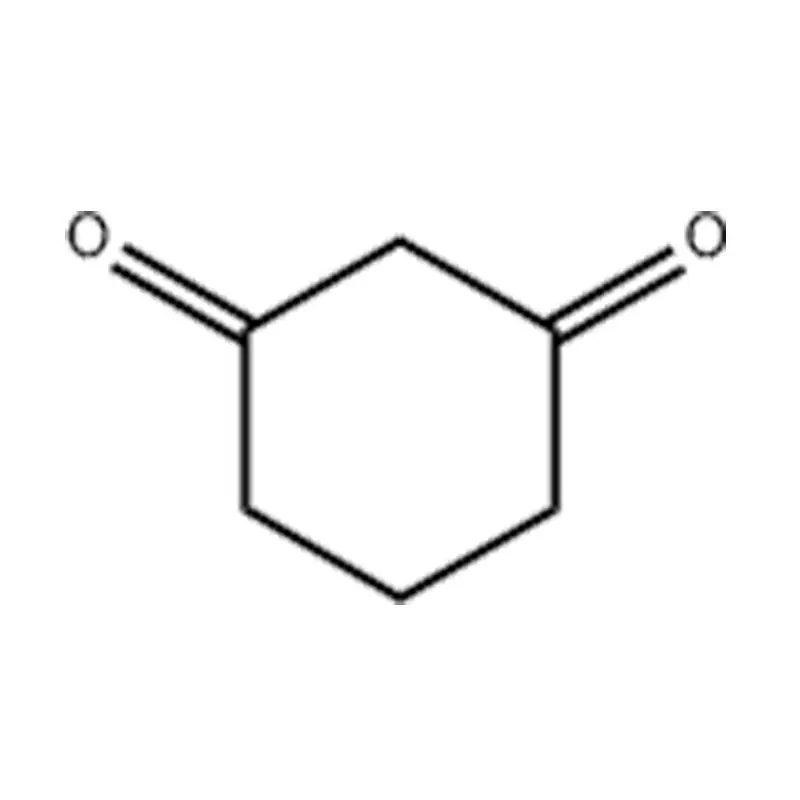
The molecular structure of 1,3-cyclohexanedione contains two carbonyl groups (C=O), and the carbonyl groups are located at the 1st and 3rd positions of the cyclohexane ring. This structure makes the molecule have a certain conjugated system, which affects its chemical and physical properties. Due to the presence of two carbonyl groups, the hydrogen atoms (α-hydrogen) adjacent to the carbonyl groups on the cyclohexane ring have higher activity, which is the active center of many chemical reactions of this compound.
Since the α-hydrogen atoms of the two carbonyl groups are highly active, they can undergo halogenation reactions, condensation reactions, etc. For example, under alkaline conditions, they can undergo aldol condensation reactions with aldehydes and ketones; and they can undergo Knoevenagel condensation reactions with diethyl malonate under the catalysis of sodium alcohol.
It has the typical properties of ketone carbonyl and can undergo nucleophilic addition reactions, such as reacting with hydroxylamine to form oxime and reacting with hydrazine to form hydrazone.
It can undergo reduction reaction and can be reduced to the corresponding alcohol.
| Property | Specification / Value |
|---|---|
| Melting Point | 101-105℃ (lit.) |
| Boiling Point | 170.05℃ (rough estimate) |
| Density | 1.1 g/cm³ |
| Storage Temperature | Store at +2℃ to +8℃ |
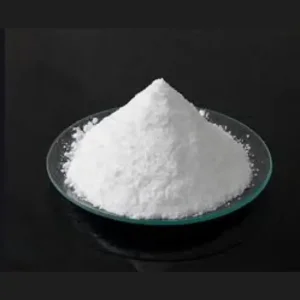
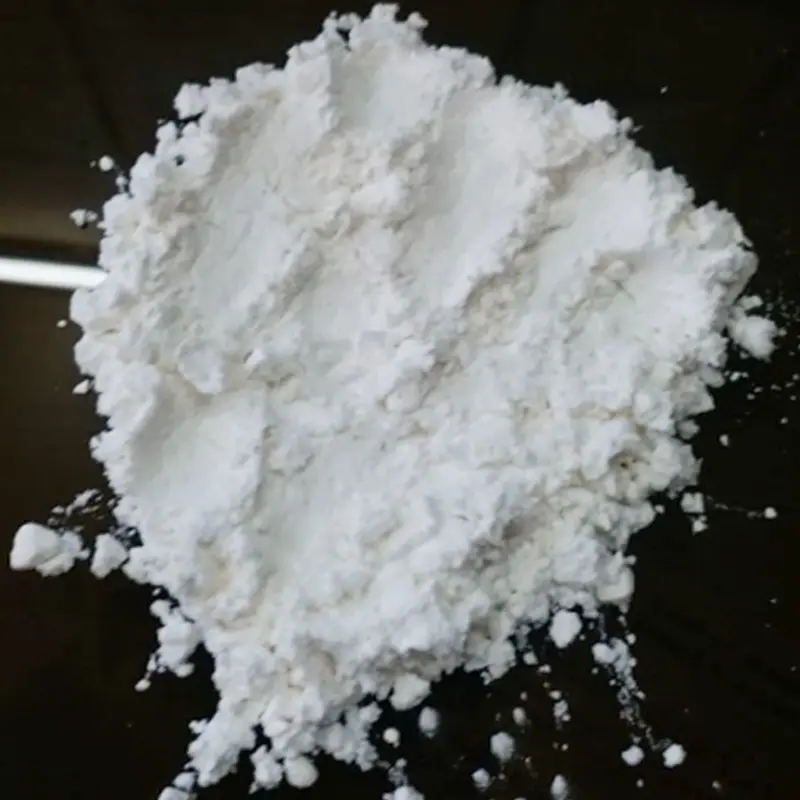
| Form | Powder |
| Solubility | Soluble in chloroform (a little), methanol (a little) |
| Packaging | 25KG Bag |
1,3-cyclohexanedione can be used as an intermediate in organic synthesis and pesticide chemistry. For example, it can be used in the synthesis of the herbicide sulfotrione (mesotrione). Mesotrione will cause the plant meristem to yellow after 3-5 days, followed by dead spots, and then the whole plant will die. It is suitable for the removal of weeds in corn fields. The characteristics of this product are that it has no impact on the environment, rainfall does not affect its efficacy, and it has no adverse effects on corn.
In organic synthesis transformation, 1,3-cyclohexanedione can be used as a building unit to react with unactivated aldehydes through aldol condensation/Michael addition reaction to synthesize 9-substituted 1,8-dioxanthene; it can also react with phthalic acid hydrazide, aromatic propargyloxy aldehyde and azide through four-component condensation reaction to synthesize [(1,2,3-triazol-4-yl)methoxy-phenyl]-2H-indazolo[2,1-b]phthalazine-trione derivatives. In addition, this compound can also be used to prepare 2-substituted adducts, which are important intermediates in the synthesis of β-enones, polyhydroquinoline derivatives, 1,8-dioxo-dodecahydroxanthene, spirocyclopentanols, oxathiols and triquinanes.
In a dry reaction flask, cyclohexane-1,3-dione (1 equivalent) and dibenzylamine (1 equivalent) were dissolved in 7.0 mL of benzene solution, and 4Å molecular sieves (about 5-10 g in the Stark apparatus) were added to the reaction mixture. The reaction system was equipped with a Dean stark apparatus and a condenser, and the reaction mixture was heated to reflux. The progress of the reaction was monitored by TLC spot plates until the 1,3-dione was completely consumed. After the reaction was completed, the reaction mixture was cooled to room temperature, and then dichloromethane was added to the reaction mixture. The solvent was removed by evaporation under reduced pressure, and the residue was separated and purified by silica gel column chromatography (AcOEt/n-hexane as eluent) to obtain the target product molecule.
1,3-Cyclohexanedione is irritating to eyes, skin and respiratory tract. Avoid direct contact with skin and eyes when using it, and wear appropriate protective equipment, such as gloves, goggles, etc.
Storage Conditions:It should be stored in a cool, ventilated warehouse, away from fire, heat sources and avoid direct sunlight.
The active centers are the hydrogen atoms (α-hydrogen) adjacent to the two carbonyl groups on the cyclohexane ring, which possess high reactivity for condensation and halogenation reactions.
It should be stored in a controlled temperature environment between +2℃ to +8℃, in a cool, dry, and well-ventilated space away from light and heat sources.
Yes, it has slight solubility (a little) in chloroform and methanol.
It serves as an essential intermediate in the synthesis of the herbicide sulfotrione (mesotrione), which is widely used for selective weed control in corn fields.
Since the powder is irritating to the eyes, skin, and respiratory tract, handlers must wear appropriate protective gear, including protective gloves and goggles, and avoid direct contact or inhalation.
The standard packaging is in 25KG bags, designed for safe industrial handling and transport.