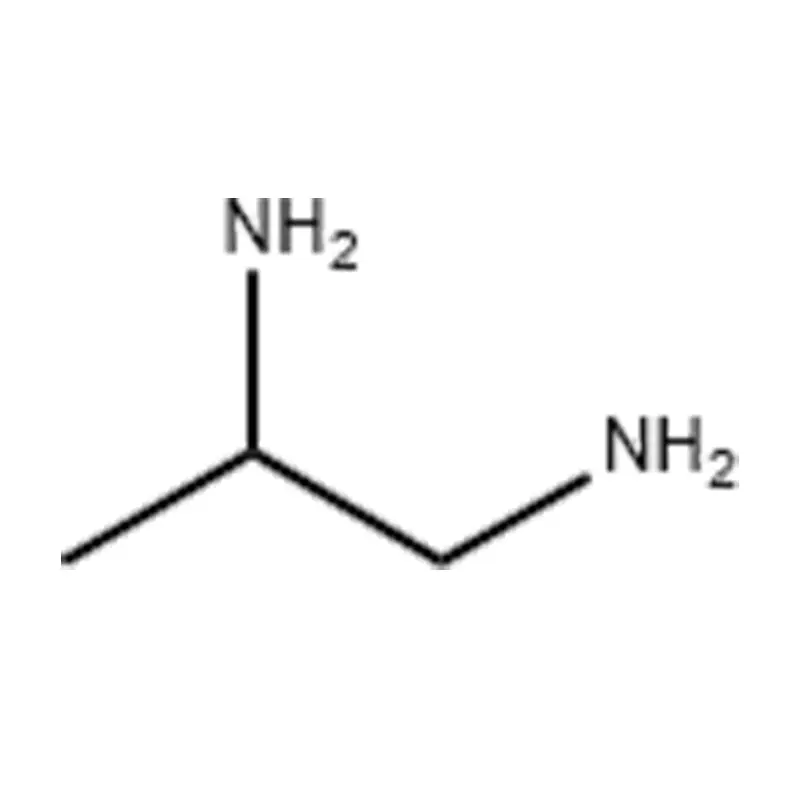
The 1,2-propylenediamine molecule contains two polar amino functional groups (-NH2), which makes the molecule as a whole have strong polarity. The two amino functional groups can interact with the surrounding molecules through hydrogen bonds, thereby increasing the interaction between molecules, which makes the boiling point and melting point of 1,2-propylenediamine relatively high. It can react with acylating agents (such as acid anhydrides, acyl chlorides, etc.) to generate corresponding acylated products.
Features & Specifications
Property
Specification Details
Melting Point
-37°C
Boiling Point
120-122°C (lit.)
Density
0.87 g/ml at 25°C (lit.)
Flash Point
92°F
Form
Transparent liquid
Packaging
200L HDPE drums, 200L Iron drums
Applications
Used in organic synthesis, pharmaceutical formulation, and synthetic dye production.
Functions efficiently as a cellosolve and rubber vulcanization accelerator.
Applied in the production of mineral processing agents, metal passivators, and air-conditioning resin curing agents.
Serves as a reliable analytical reagent for detecting metals such as mercury, copper, and silver.
Acts as an essential intermediate in the pharmaceutical industry to produce 1,2-propylenediaminetetraacetic acid and the anticancer drug aprotinin.
Utilized widely as an emulsifier, antioxidant, and rubber vulcanizer.
Precautions & Handling
Health Hazards & Contact Information
1,2-Propylenediamine is corrosive and highly irritating to the eyes, skin, and respiratory tract. Exposure can cause severe chemical burns. Suitable protective equipment, including safety glasses and protective gloves, must be worn at all times during handling. In case of accidental contact with the skin or eyes, rinse immediately with plenty of running water and seek professional medical treatment.
Fire & Storage Hazards
This substance is highly flammable. Its vapor can mix with air to create an explosive environment. Exposure to open flames, sparks, or high temperatures presents a severe risk of ignition and explosion. Store and handle this chemical away from heat sources and open flames, and ensure the work area is continuously maintained with good ventilation.
Frequently Asked Questions
What are the primary applications of 1,2-propylenediamine?
1,2-Propylenediamine is widely used in organic synthesis, pharmaceutical manufacturing, and the production of synthetic dyes. It also acts as a curing agent for resins, a metal passivator, a rubber vulcanization accelerator, and an analytical reagent to identify metals like mercury, copper, and silver.
What causes 1,2-propylenediamine to have high melting and boiling points?
The molecule contains two polar amino functional groups (-NH2), which give it strong overall polarity. These functional groups interact with surrounding molecules through hydrogen bonding, strengthening the intermolecular attractions and resulting in a higher boiling point (120-122°C) and melting point (-37°C).
Is 1,2-propylenediamine hazardous to health?
Yes, it is highly corrosive and causes severe irritation and burns to the skin, eyes, and respiratory tract. Personal protective equipment, such as gloves and protective goggles, should always be worn when handling it.
What are the storage guidelines regarding fire safety?
Since 1,2-propylenediamine is flammable and its vapors can form explosive mixtures with air, it must be stored and handled far away from open flames, high heat, and potential spark sources. The storage space must remain dry, cool, and well-ventilated.
How is this chemical typically packaged for transport?
It is safely packed and delivered using industrial-standard containers, specifically 200L HDPE (High-Density Polyethylene) drums and 200L Iron drums, preventing leaks and chemical reactions during transit.
 Saier Chemical