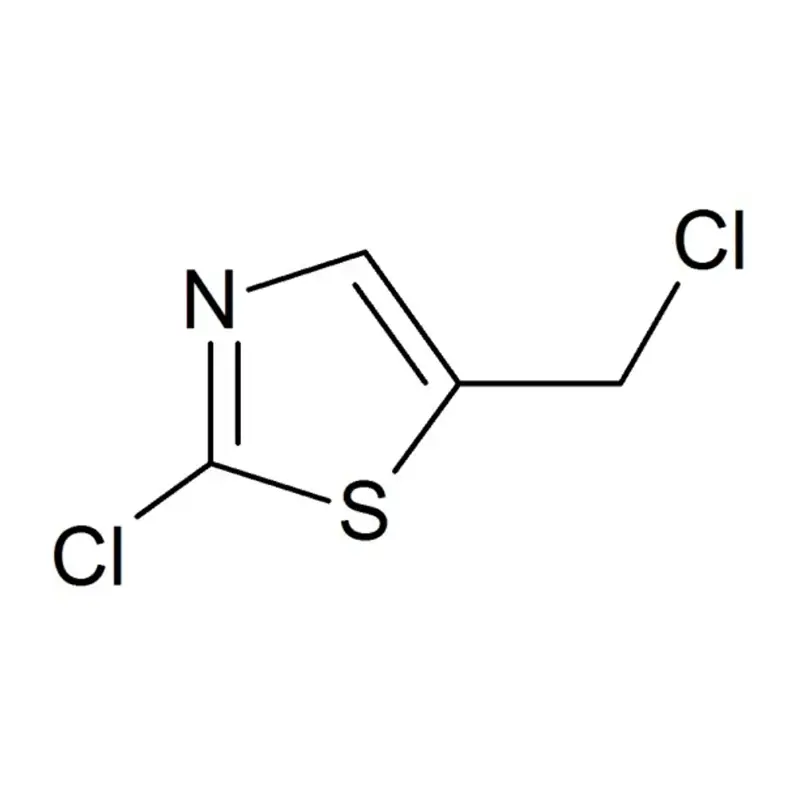
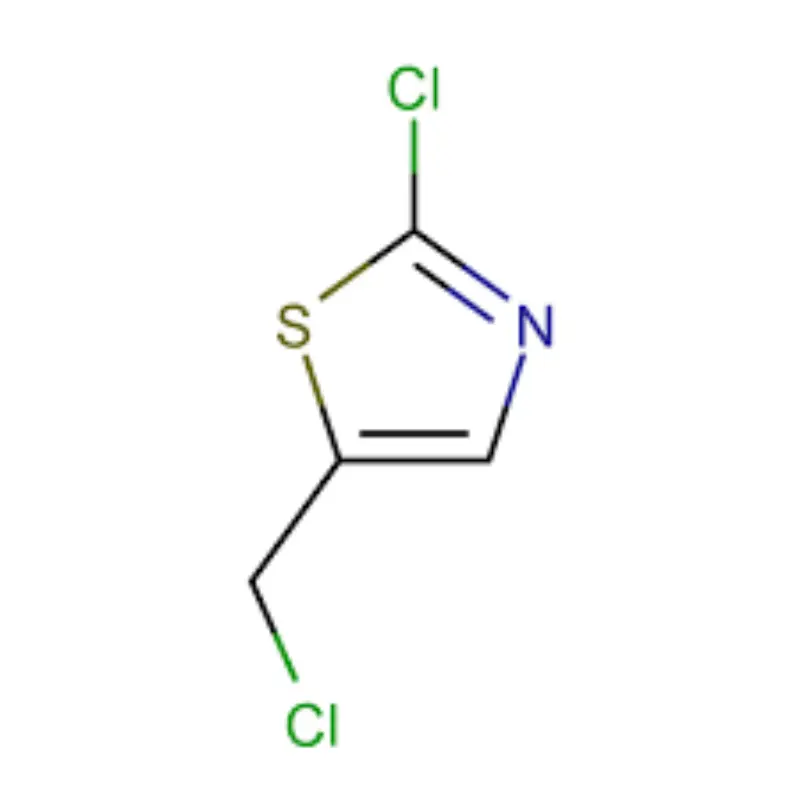
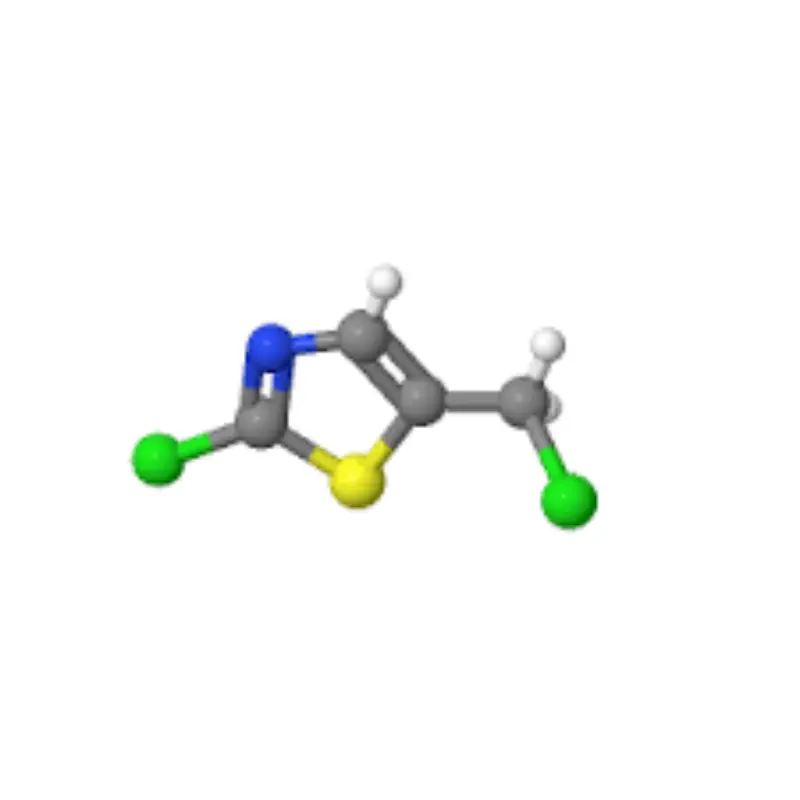
2-Chloro-5-chloromethylthiazole (abbreviated as CCMT) is a pale yellow crystalline or pale yellow liquid with a content of ≥98% and a melting point of 29-31°C. It is an essential intermediate for the synthesis of second-generation neonicotinoid insecticides such as thiamethoxam, thiamethionam, and chlorothalonil. The mechanism of action of second-generation neonicotinoid insecticides is similar to that of the first-generation ones, but they have the advantages of lower dosage, broader spectrum of action, and higher safety. They can not only control above-ground and underground pests but also treat stems, leaves, soil, and seeds.
Using 3-chloropropene as the raw material, chlorine gas (or compounds that can generate chlorine gas, such as sulfonyl chloride) and the chloroform solution of 1-isothiocyanato-2-propene are simultaneously injected into the refluxing chloroform solution for reaction.
It is used in the synthesis of pesticides thiamethoxam and thiamethionam, as well as in the production of the medicine ritonavir. Currently, thiamethoxam, as a new generation of nicotinic insecticides, has attracted much attention in the pesticide industry and has a promising market prospect; ritonavir, as an inhibitor of human immunodeficiency virus (HIV), is indispensable even without a specific drug.
Frequently Asked Questions (FAQ)
Q1: What is the chemical content and melting point of CCMT?
2-Chloro-5-chloromethylthiazole (CCMT) has a content of ≥98% and a melting point of 29-31°C. It is typically a pale yellow crystalline solid or liquid depending on temperature.
Q2: What are the primary applications of 2-Chloro-5-chloromethylthiazole?
It is primarily used as an essential intermediate in synthesizing second-generation neonicotinoid insecticides like thiamethoxam and thiamethionam. It is also used in the manufacture of ritonavir, an HIV inhibitor medicine.
Q3: What is the solubility behavior of CCMT?
CCMT is insoluble in water. However, it is soluble in methanol and various other organic solvents like dichloromethane, chloroform, and carbon tetrachloride.
Q4: How is CCMT configured and synthesized?
CCMT is synthesized using 3-chloropropene as the raw material. Chlorine gas (or chlorine-generating compounds like sulfonyl chloride) and a chloroform solution of 1-isothiocyanato-2-propene are simultaneously reacted in a refluxing chloroform solution.
Q5: What packaging specifications are provided?
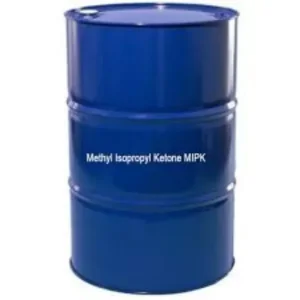
The product is securely supplied and packaged in either 200L HDPE drums or 200L Iron drums.
 Saier Chemical